Why Ceramic Tile Grout Turns Dark So Quickly and How We Restored the Grout
Why Ceramic Tile Grout Turns Dark So Quickly and How We Restored the Grout
A Gilbert Homeowner With Grout That Always Looked Dirty
A homeowner in Gilbert, AZ reached out to Clean & Shine AZ after becoming frustrated with their ceramic tile floor. The tile itself still looked good, but the grout lines had gradually turned dark gray and never seemed to stay clean for long. Even after mopping, the grout would begin looking dirty again within a few days.
This is one of the most common problems homeowners experience with ceramic tile floors. Many people assume the grout is permanently stained or that the tile installation was done incorrectly. In most cases, however, the real issue has more to do with how grout behaves as a material and how soil and cleaning products interact with it over time.
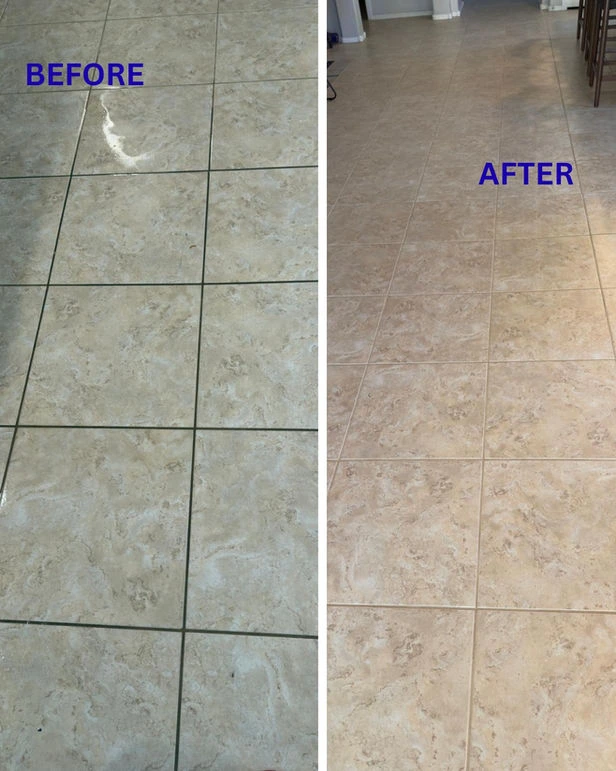
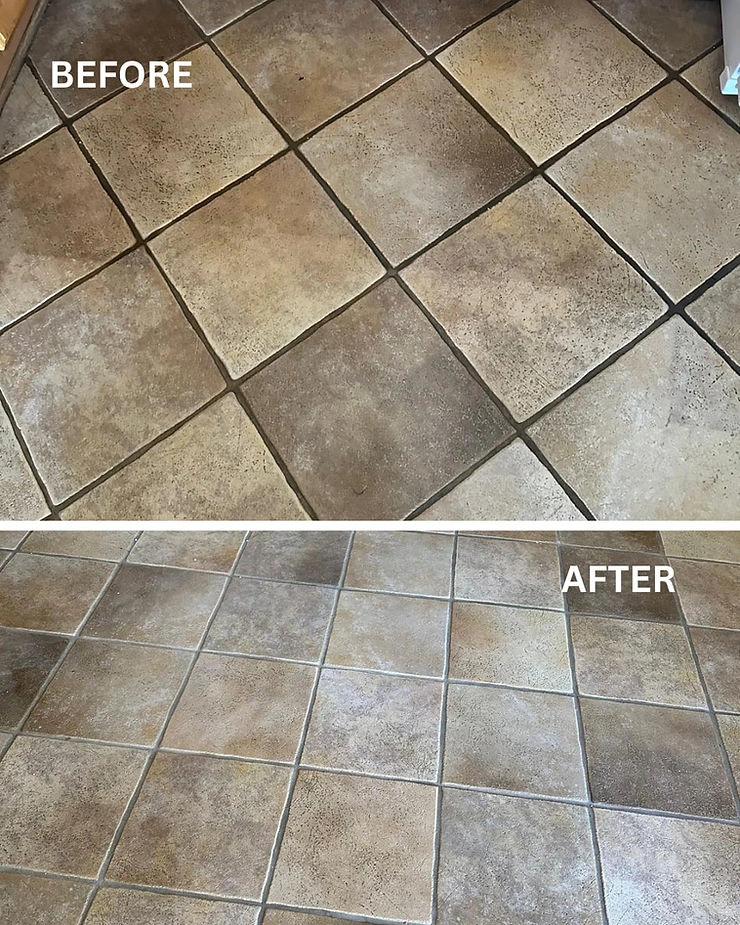
The photos from this Gilbert project show the dramatic difference between the original grout color and the restored grout after professional cleaning.
Understanding the Difference Between Tile and Grout
To understand why grout turns dark so quickly, it helps to understand how tile floors are constructed.
Ceramic tile itself is manufactured from kiln-fired clay and finished with a glazed surface. That glaze makes the tile dense and relatively non-porous, which is why tile surfaces are easy to wipe clean and resistant to staining.
Grout behaves very differently.
Most residential installations use cementitious grout, which is made from Portland cement, silica sand, pigments, and sometimes polymer additives. Unlike tile, grout is intentionally porous so it can bond to the edges of the tile during installation. Those microscopic pores remain in the grout after it cures.
Because of this structure, grout absorbs liquids and contaminants through capillary action, a process where liquids are drawn into tiny pores within a material.
Over time those pores fill with a mixture of soil, oils, detergent residue, and moisture.
Why Grout Gets Dark Even in Clean Homes
In the Gilbert home we cleaned, the grout had gradually darkened from a combination of soil types that are common in residential environments.
These included:
- Fine particulate soil tracked in from outdoors
- Oily residues from foot traffic and cooking areas
- Detergent residue left behind from repeated mopping
- Mineral deposits from hard water
- One of the biggest contributors was detergent residue.
Many floor cleaners contain surfactants designed to loosen dirt. When mop water dries, a small amount of this surfactant residue remains behind. Because grout is porous, it absorbs that residue and traps it below the surface.
Once the residue dries, it becomes slightly sticky and begins attracting additional soil. Over time this creates layers of contamination that cause grout to appear permanently dark.
Soil Loading in Grout Joints
Another factor that accelerates grout discoloration is soil loading.
Grout joints sit slightly recessed compared to the surface of the tile. This means they naturally collect dust and debris as people walk across the floor.
As foot traffic moves across the tile, those particles are pushed deeper into the grout pores. Eventually the soil becomes compacted below the surface, which is why scrubbing the grout with household brushes often fails to remove the discoloration.
In the Gilbert home, the darker grout followed clear traffic patterns through the kitchen and entry areas, which is a classic sign of soil loading rather than permanent staining.
Why Household Cleaning Methods Usually Fail
Many homeowners attempt to clean grout using scrub brushes, baking soda solutions, or stronger household cleaners. While these methods may remove some surface dirt, they rarely solve the underlying problem.
The issue is not just soil sitting on top of the grout. The contamination has already penetrated into the pore structure of the grout itself.
Without a process that both breaks down the contaminants and extracts them from the grout, the discoloration usually returns quickly.
This is why many tile floors seem to look dirty again only days after being cleaned.
The Professional Approach to Tile and Grout Cleaning
For this Gilbert project, we used a professional tile and grout cleaning process designed to suspend and extract the contamination trapped within the grout.
The first step involved applying an alkaline tile and grout cleaner designed to break down oils and detergent residues. Alkaline cleaning agents are effective because they emulsify oils that bind soil to the grout surface.
After applying the cleaning solution, we allowed proper dwell time so the chemistry could penetrate the grout pores and loosen the compacted contamination. Dwell time is critical because the solution needs time to break the bond between the soil and the grout.
Once the contaminants were suspended, we used truck-mounted steam cleaning equipment with a specialized tile extraction tool.
How Truck-Mounted Extraction Restores Grout
Truck-mounted tile cleaning systems use heated water combined with controlled pressure to flush the grout joints. The heat helps break down oils and detergent residue, while the pressurized rinse pushes the contamination out of the grout pores.
At the same time, powerful vacuum extraction removes the dirty water immediately from the floor.
This flushing and extraction process is what separates professional grout cleaning from standard mopping. Instead of spreading the soil across the floor, the system physically removes it from the grout.
As the cleaning process moved across the tile floor, the difference between the treated areas and the untouched grout became very clear.
The original grout color began to reappear once the years of soil and residue were removed.
The Results After Professional Cleaning
Once the cleaning process was complete, the grout lines were dramatically lighter and much more uniform in color. The tile itself also looked brighter because the thin layer of detergent residue had been removed from the surface.
The homeowner was surprised by how much of the original grout color returned after the embedded contamination was flushed from the grout.
What had looked like permanently stained grout turned out to be a buildup of soil and residue that simply required the correct cleaning process.
How Grout Sealers Help Prevent Future Discoloration
After grout has been restored, many homeowners choose to apply a penetrating grout sealer.
Penetrating sealers work by entering the pores of the grout and creating a barrier that slows down how quickly liquids and contaminants can enter the grout structure. Unlike topical sealers, which form a film on the surface, penetrating sealers allow the grout to breathe while still providing protection.
While sealing does not make grout completely stain proof, it significantly improves how easy it is to maintain.
Why Professional Tile Cleaning Makes Such a Difference
Ceramic tile floors are extremely durable and can last for decades, but grout requires periodic restoration because of its porous nature.
Professional tile and grout cleaning removes the contamination that normal household cleaning cannot reach. By breaking down the oils, residues, and compacted soil inside the grout pores, the cleaning process restores the original appearance of the floor.
For this Gilbert homeowner, the difference between the before and after was dramatic. The grout lines were clearly defined again, the tile looked brighter, and the entire room felt cleaner.
Sometimes the solution to dark grout is not replacing the tile floor at all. It is simply removing the years of contamination that have settled into the grout.
Natalya Vasylyeva, owner of Clean & Shine AZ, will text you back with your quote within five minutes. If you need immediate assistance, please call or text.